Published March 3, 2026 03:07AM
If you buy through our links, we may earn an affiliate commission. This supports our mission to get more people active and outside.Learn about Outside Online's affiliate link policy
We Tried Yeti’s New Hiking Backpack. Here’s What We Think.
The brand synonymous with bombproof coolers is taking on the trail. We put their rugged new hiking pack to the ultimate test.
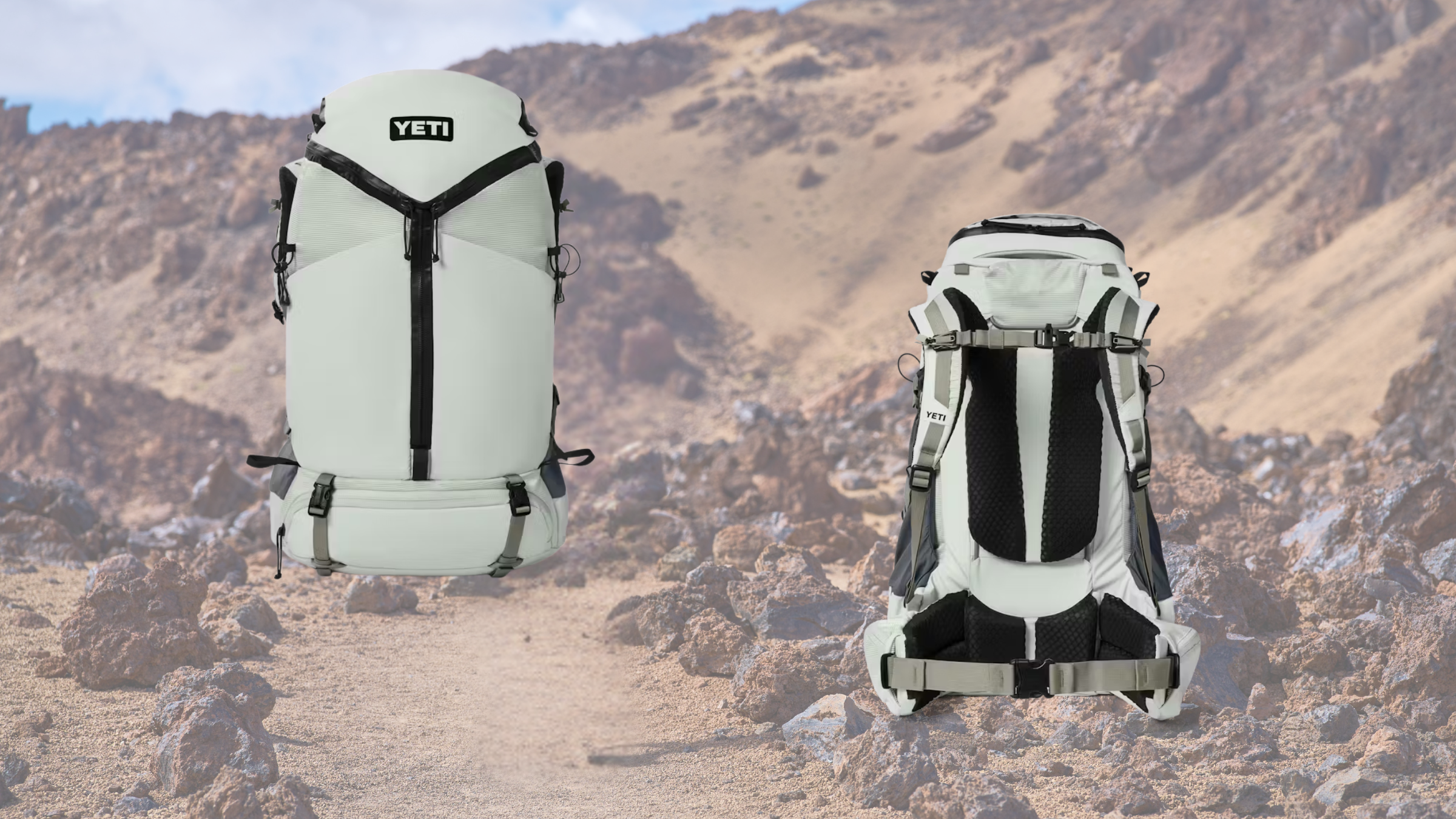
Built for the rugged outdoors, the new YETI backpack features a durable, weather-resistant design that's at home on any trail. (Photo: YETI/Canva)
Table of Contents
Yeti, longtime maker of hard-sided coolers, insulated mugs, and expensive buckets, is now officially in the backpack game. And after a sneak peek at early samples, we have some opinions.
In 2024, the Texas-based brand purchased Mystery Ranch, a legacy pack maker known for technical hiking and hunting bags. Now, nearly two years later, we’re seeing the first result of that partnership: a line of technical hiking packs ranging from 32 liters to 60 liters. While the line’s overall look and feel will seem familiar to Mystery Ranch fans, a number of the new features are unmistakably Yeti. Namely: durability, sheer size—and weight.
We tested both the Skala 60 and the Skala 32, but in this review, we’ll focus on Yeti’s flagship backpacking pack: the Skala 60.
Yeti Skala 60
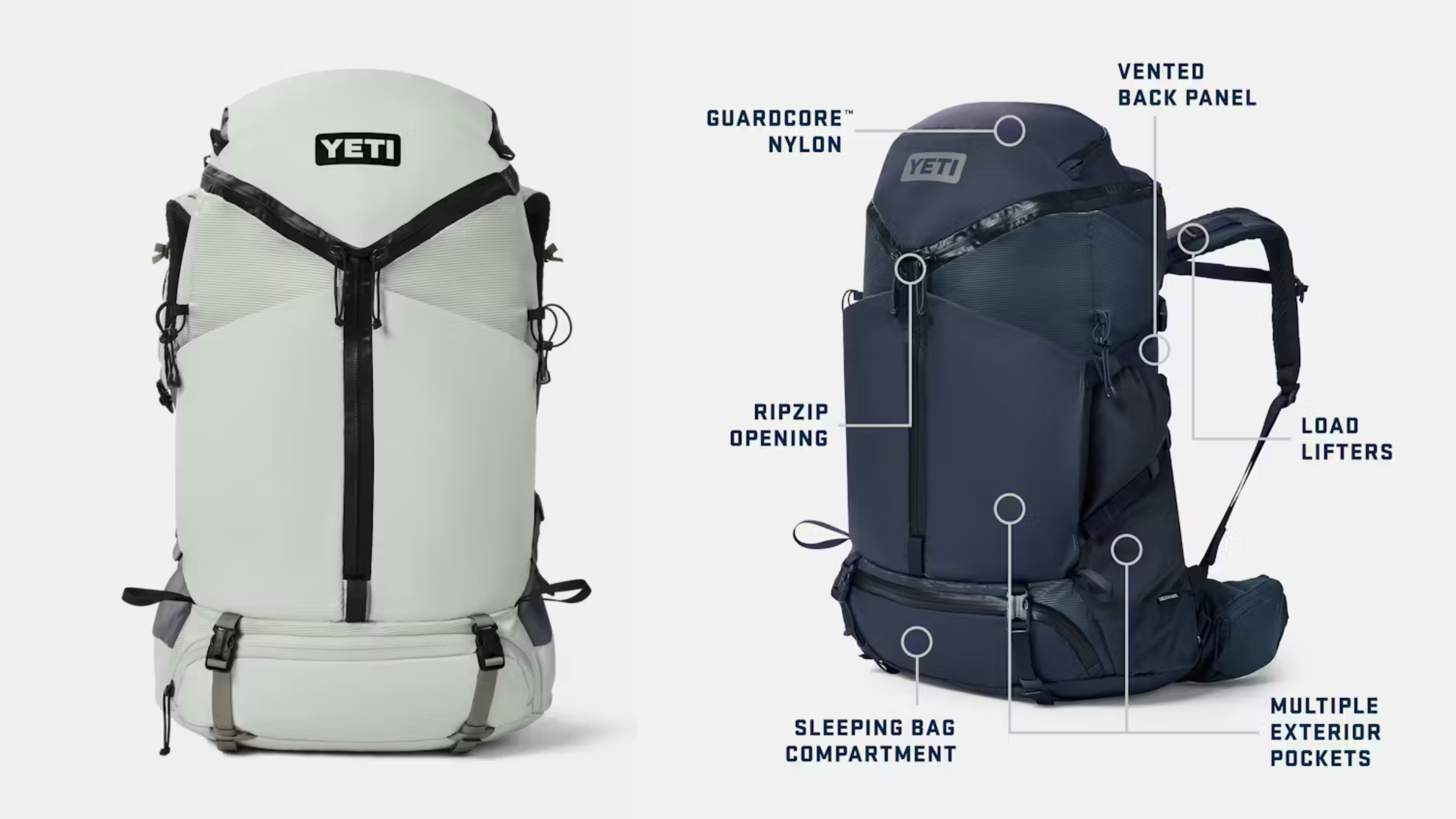
Weight: 4.6 lbs
Sizes: W’s XS/S and M/L; M’s S/M and L/XL
Pros:
+ Massive capacity
+ Tons of organization
+ Durable materials
Cons:
– Heavy
– Not as comfortable as similar packs
– Limited on-the-go organization
What to Know About the Yeti Skala 60 Backpack
The Skala 60 will probably outlast me, my grandchildren, and, likely, the apocalypse. It is, in one word, burly. The main packbag uses a 210-denier nylon reinforced with superstrong threads of ultra-high molecular weight polyethylene (UHMWPE). Meanwhile, high-wear areas—like the pack bottom and dorsal panels—feature a puncture-resistant 420-denier HD Nylon. That’s getting close to luggage-grade.
The only downside to the abrasion-proof materials on these Yeti backpacks is that they’re heavy. The Skala 60 clocks in at 4.6 pounds, in large part thanks to the thick fabric, chunky buckles, and heavy #10 YKK zippers (again, luggage grade).
ADVERTISEMENT
Size and Suspension
The other contributor to the weight is the Yeti backpack’s sheer size. Yeti bills the Skala as a 60-liter, but it carries more like a 70, thanks to a broad footprint and enormous side and dorsal pockets. I had no problem stuffing a full-size bear can in the main bag—or fitting a single-person tent into any of the four external pockets.
ADVERTISEMENT
The size makes it easy to stuff this pack full, and the suspension is built to handle it. A thick aluminum perimeter frame transfers loads to a broad hipbelt. The hipbelt wings each flare to about 5 inches wide on either side of the spine, fully wrapping the iliac crests and providing decent load distribution to the hips.
The only trouble is that the pack is more square in shape than others in its size class; because it extends so far out from the back, it’s hard to keep loads close to the spine. With my full overnight kit on board (33 pounds total), the pack tended to lean backward in a way that even the compression straps and load lifters couldn’t fully compensate for. As a result, the weight pulled against my shoulders and left them aching after just a few hours on the trail.
Comfort and Padding
The good news is that there’s about an inch of foam lining the shoulder straps and hipbelt wings. That helped prevent undue soreness during half-day training hikes around Boulder, Colorado. Even thicker padding guards the lower lumbar.
ADVERTISEMENT
The thick pads along the backpanel don’t just protect your bones; they also create air channels along the spine and lower lumbar. I had about two inches of daylight between my back and the pack, which permitted significant airflow. I never sweated out, even while busting out a 1,500-foot climb in 65°F sun.
There’s only one downside to the thick lumbar padding: comfort. It’s stiff, and rigid seams line the lower portion of the pads. Those seams dug into my sacrum, leaving light bruising after only three miles with 35 pounds on board. (This issue may be body size- and shape-dependent, so I’d take the Skala for a test run before committing.)
Adjustability
Fortunately, nearly infinite adjustability helps mitigate some the comfort issues. You can adjust the position of the load lifters in two places: where they attach to the backpanel, and where they attach to your shoulder. Moving the buckle forward helped me ratchet loads further toward my spine, alleviating some (but not all) of the shoulder pain I experienced with my 35-pound training weight.
ADVERTISEMENT
The sternum strap slides up and down along a moderate range, and the backpanel length features a standard Velcro adjustment system. I found it easy to tweak on the fly when I got halfway up Boulder’s 6,863-foot Mount Sanitas on a training hike and realized the additional weight was affecting the fit.
Even properly adjusted, the Yeti pack still swayed slightly on scrambly sections. However, it wasn’t enough to throw off my gait or make me feel insecure on the trail’s more exposed ridges
Organization
For the most part, the Skala’s organization was spot-on. Two pockets in the shallow, fixed toplid fit small valuables, and four external pockets help keep layers, trekking poles, and water bottles organized. There were some small misses, though. The hydration sleeve is small (I could only fit a three-liter bladder). And while the three-way zipper design provides great access to the main packbag, the central zip terminates underneath the toplid. That means you have to undo all the other zippers to access the main one—putting more steps between you and your stuff.
That said, my biggest beef with the Skala’s organization was its lack of on-the-go storage. While each of the twin hipbelt pockets are big enough to fit a smartphone (plus a couple snacks), there are no chest pockets, and the lateral bottle pockets are inaccessible while hiking. Each one has an opening in the side, but the pockets themselves aren’t sufficiently gussetted. That means that when the pack is full, bottles end up pinned in place.
ADVERTISEMENT
The recessed position of the toplid means you can’t access items in the brain while hiking, either. And because it’s fixed, you can’t extend the pack’s volume the way you would with a floating lid.
Other Packs: Yeti Skala 32
Testers voiced similar kudos and complaints for the Skala 32 after a season of hiking, cross-country skiing, and ice climbing around Arizona and Utah. They were impressed with the load carry and comfort—our Arizona-based guide tester had no issues with shoulder soreness or rubbing, even toting 27 pounds.
That said, she did take issue with the Skala 32’s heavy weight and the fussiness of the central zipper access. The tri-zip design is a good idea, but the execution—at least on these packs—isn’t quite there yet.
Bottom Line: Do We Recommend the Yeti Skala Pack?
Overall, Yeti is onto something with these packs. The brand clearly knows how to eliminate weak links in a design, be they flimsy zippers, thin materials, or fragile suspension. But, unlike coolers, backpacks shine when they strike a balance between durability and weight—a balance Mystery Ranch spent a lifetime trying to find, and a quest Yeti will likely continue.
I fully expect Yeti to find that sweet spot in future iterations of the Skala line. For now, though, these Yeti backpacks are best for folks who prize toughness above all else.
