Published March 2, 2026 12:34PM
Lake Powell Is Bracing for Unusually Low Water Levels Ahead of Summer Tourism Season
After an unusually dry winter, the National Park Service says that it is preparing for lower-than-normal water levels at one of the country’s most popular summer hotspots.
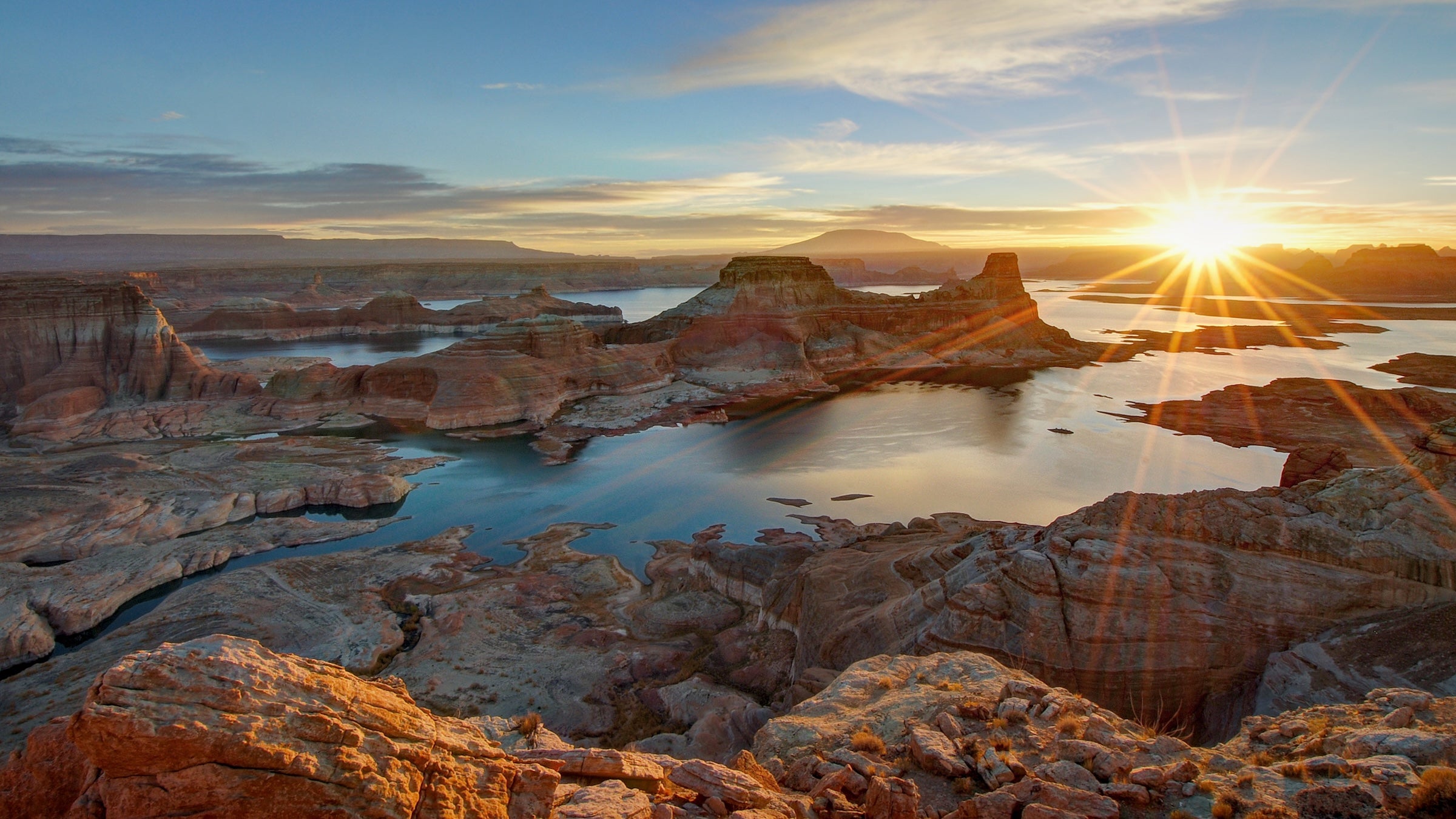
Sunrise at Alstrom Point over Lake Powell in Utah (Photo: Sierralara/Getty Images)
Summer is coming up fast, but low water levels at one of the biggest vacation spots in the American Southwest could spell problems for tourists.
According to the National Parks Traveler, the NPS is scrambling to ensure Lake Powell has enough water for the millions of boaters, paddlers, and swimmers who flock to the site each year. As a result of declining water levels in recent years, the NPS has already dug a deeper bed in at least one part of the lake, shut down one of the lake’s marinas, and extended boat ramps to reach the falling water line.
The 161,000-acre Lake Powell is a man-made lake on the Colorado River, straddling the Utah-Arizona border. After Lake Mead—where water levels are also falling—it’s the largest reservoir in the country. Lake Powell is also a tourism hotspot and the main attraction in Glen Canyon National Recreation Area, which saw nearly 5 million visitors in 2024, according to NPS statistics.
Melting snow from the Upper Colorado River basin usually refills the lake each year, but the 2025-26 winter was remarkably dry. States across the western U.S., including Utah, saw some of the lowest snow levels on record. NPR reports the snow-water equivalent, the actual water stored in snowpack, is nearly half of the average in the areas that feed Lake Powell.
NPS shared on its park informational page that Lake Powell’s water level is currently at 3,531 feet above sea level. The lake is considered full when the water is at 3,700 feet. Because of this drop, only two of Powell’s 14 boat launch ramps are currently accessible. The park’s ferry, which requires a minimum water level of 3,575 feet to operate, is also closed until further notice.
The Bureau of Reclamation, an agency that manages water resources in western states, predicts that 2026 water input to the lake will be just 57 percent of the average between April and July.
On February 27, the NPS posted on Facebook that, in anticipation of declining water levels, the park is building new boat ramps at three locations: Antelope Point Public, Stanton Creek at Bullfrog, and Hite North. However, the agency won’t finish building the ramps until after summer 2026. In the meantime, the NPS is extending at least one ramp, the Stateline Auxiliary Ramp, and exploring other infrastructure modifications, like new temporary ramps, to make sure visitors can still get to the water.
Lake Powell remains open for water-based recreation this summer, but visitors should be prepared for more congestion, fewer amenities, and a drier landscape than in previous years, the NPS said.
ADVERTISEMENT
“While lower lake levels are expected, the park and its partners are actively implementing strategies to maintain access, and lake access is not anticipated to be lost this summer,” NPS wrote on Facebook.
