Published April 30, 2026 03:06AM
3 Strength Exercises to Prevent Muscle Loss on GLP-1s
A weight-management doctor and an exercise physiologist explain why strength-training is important when taking a GLP-1 and recommend these free-weight exercises to help you preserve your gains.

(Photo: Maskot/Getty)
Reduced muscle mass, aka sarcopenia, is a common side effect of weight loss induced by GLP-1 receptor agonists, such as Ozempic, Wegovy, and Zepbound. However, muscle loss often results from rapid weight loss, regardless of the method.
A 2024 article published in The Lancet Diabetes and Endocrinology found that, on average, 25 percent to 39 percent of the total weight people lose while taking these medications is muscle loss.
“Building or even preserving muscle as you lose weight is challenging,” says Dr. Yuval Pinto, an obesity medicine specialist at Johns Hopkins Medicine with expertise in weight management and metabolic health. But what’s unique about GLP-1 use is that these drugs can potentially simulate rapid weight loss, which could worsen muscle loss compared to more gradual weight loss, Pinto says.
There is good news, though. Strength training while taking a GLP-1 can help preserve muscle mass. That’s because it signals to your body that it’s important to keep muscle, says Jamie Pasquin, an exercise physiologist and certified strength and conditioning specialist at the Hospital for Special Surgery in New York.
Without strength training, Pasquin explains, your body is quick to ditch muscle. That said, here are three strength moves Pasquin recommends to support muscle preservation while on a GLP-1.
ADVERTISEMENT
Do These 3 Exercises to Prevent GLP-1 Muscle Loss
The recommended amount of strength training for people on GLP-1s varies with age, fitness level, goals, and other factors, but as a general rule, Pasquin recommends at least two full-body strength training sessions a week, using a mix of machines and free weights.
The moves below are examples of free-weight exercises, and Pasquin suggests including them in your strength-training workouts once a week.
ADVERTISEMENT
If you’re new to these exercises, start with 2 to 3 sets of 4 to 6 reps to help your body get used to the movement. Once you’ve mastered proper form and can perform the exercises with a good range of motion, incrementally increase to 10-12 reps per set. From there, gradually increase the weights as you work back down to 4 to 6 reps.
Super important: When doing these moves, make sure you finish each set feeling like you could have only managed 2 to 3 more reps with good form. Pushing your muscles to that level of fatigue is “what’s required to signal to the body that the muscle is essential to keep on your skeleton,” Pasquin explains.
If you have a history of injury or a medical condition that impacts your ability to exercise (such as high blood pressure, for example), get cleared by your doctor before trying these moves.
1. Goblet Squat
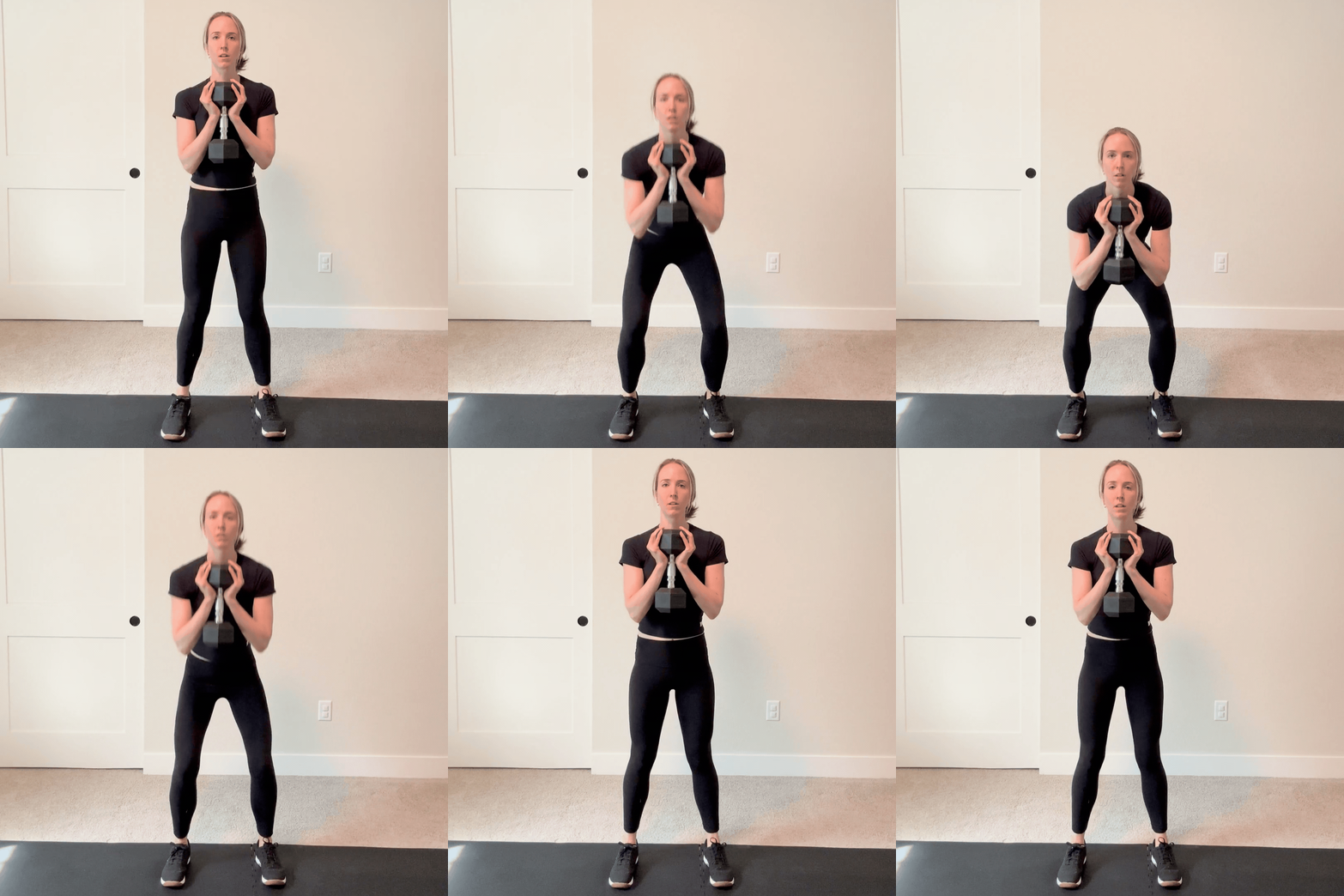
This exercise is a “great entry point to learning how to squat and train the lower body,” Pasquin says. It engages tons of lower-body muscles, such as the quads, glutes, and hamstrings, as well as muscles that support your posture, including your abs, back, and shoulders. Plus, it’s easy to scale up as you grow your strength: simply use a heavier weight.
Optional: If you’re struggling to descend low enough, place 2.5 or 5-pound weight plates under your heels to enable greater depth.
ADVERTISEMENT
How to Do It:
- Stand tall with feet hip-distance apart (or slightly wider) and hold a heavy dumbbell vertically at chest-level, gripping the top end with both hands. Engage your core so your back is flat (not arched or rounded).
- Keeping a flat back, inhale as you bend your knees and push your hips back to lower down into a squat. Stop when your quads are parallel to the ground (or before that point, if you have mobility restrictions). Pause for a moment, then exhale and press through your heels to return to standing, squeezing your glutes as you come up. This is 1 rep.
2. Dumbbell Chest Press
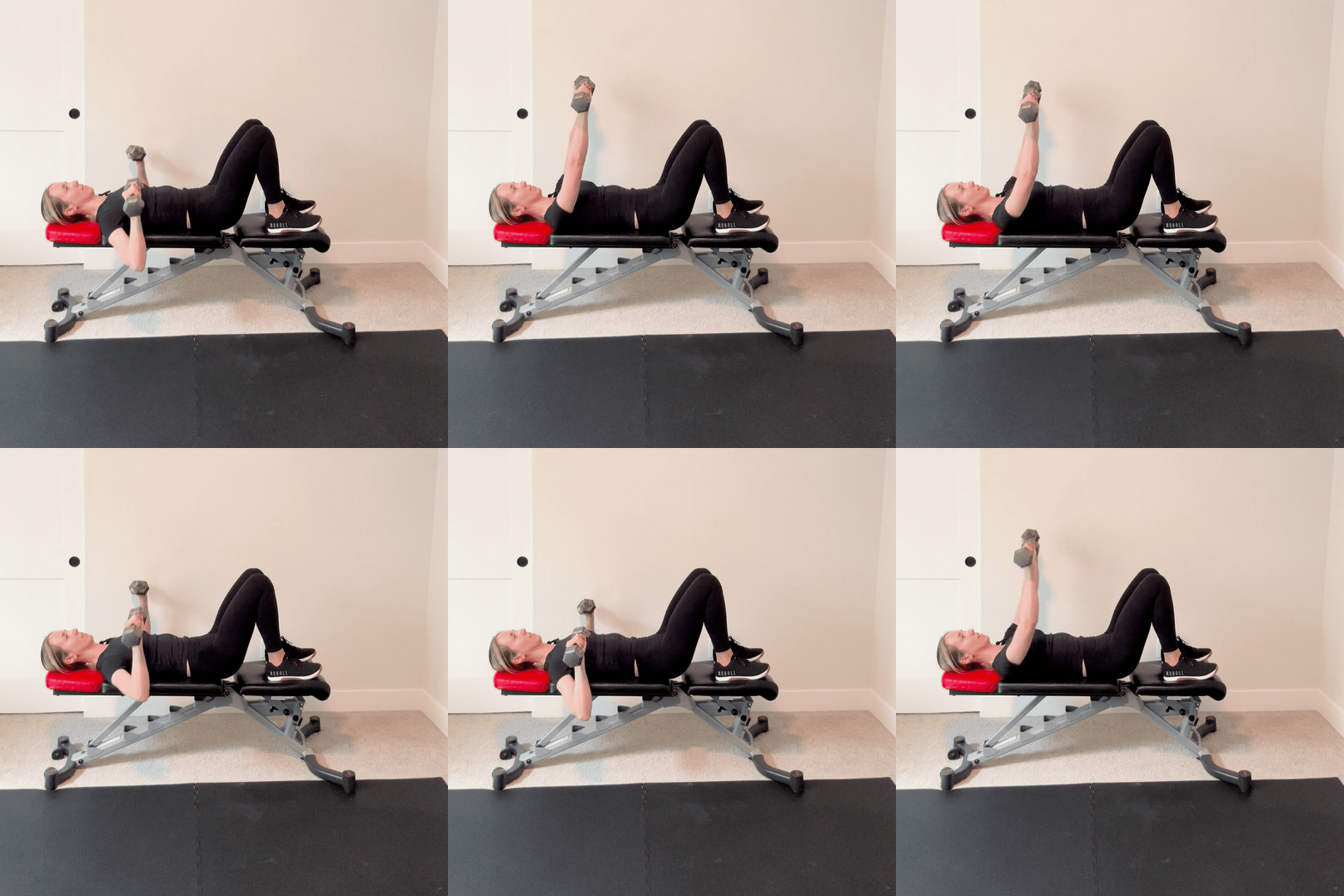
This exercise targets the pecs (chest muscles), which are engaged as you push the dumbbells away from your body. It also works your triceps and anterior deltoids (front shoulder muscles), which assist your pecs in that pushing motion. And it fires up your core, too, which has to stay engaged the whole time to protect your lower back.
Using dumbbells for this exercise, rather than a bar, helps you achieve a larger range of motion. You can lower your elbows down a little further than the bench level instead of stopping the motion when the bar hits your chest. That larger range of motion engages more of your pecs, Pasquin explains.
How to Do It:
- Grip a medium dumbbell firmly in each hand and sit on a weight bench with legs straddling each side of the bench. Lie your head and back on the bench, bend your knees, and place your feet flat on the ground or up on the bench (whichever feels more comfortable).
- Engage your core so that your lower back presses into the bench.
- Hold the weights above your chest, with hands rotated about 45 degrees relative to your body. Your forearms should be pointing straight up. This is the starting position.
- Inhale, then keeping your core engaged and the weights at chest level, exhale as you straighten your elbows to press the weights straight up. Pause for a moment at the top, then inhale as you bend your elbows to lower the weights back down to the starting position. This is 1 rep.
3. Single-Arm Bent-Over Row
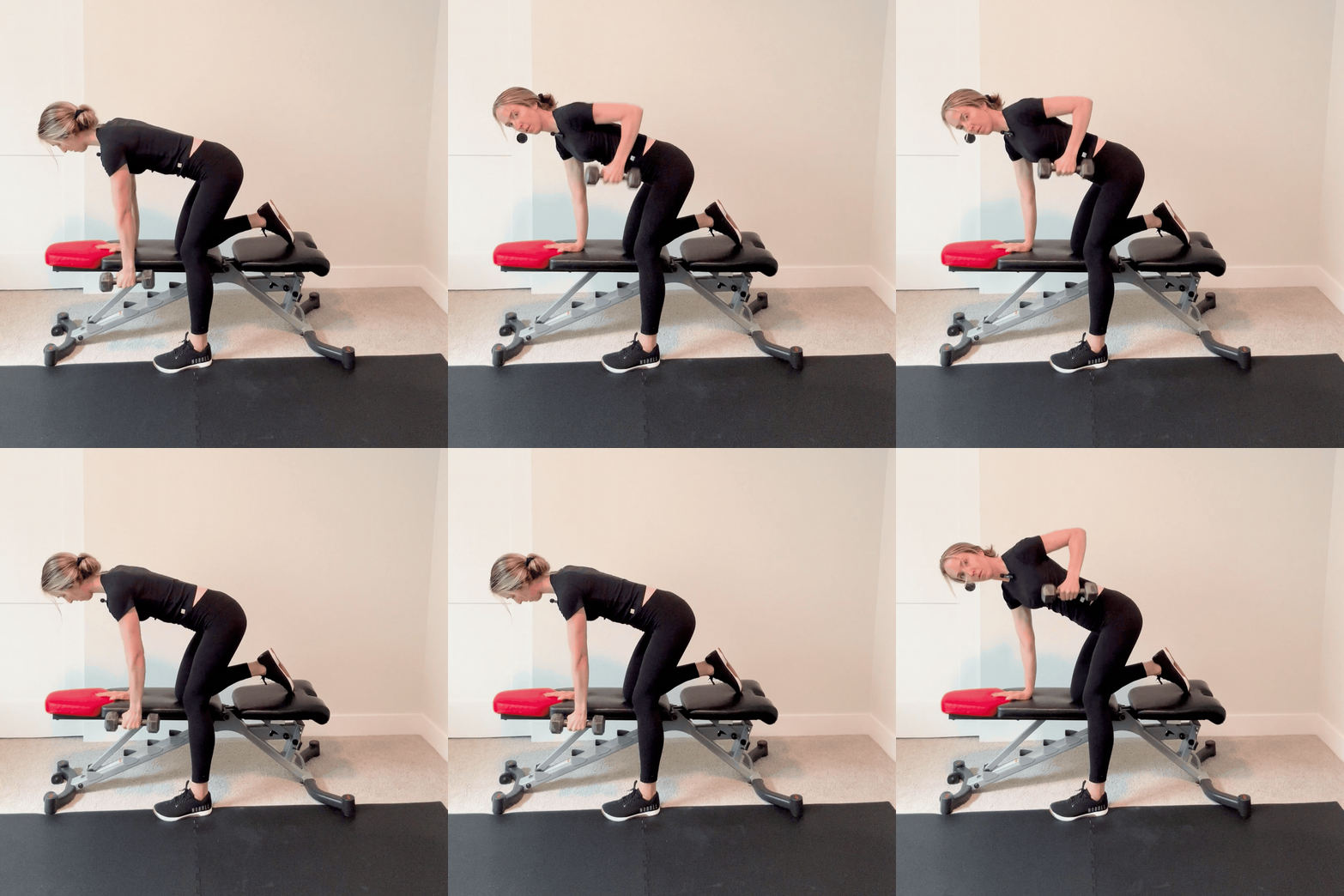
This exercise really works your lats (the broadest muscle in your back), along with your rear deltoids (a shoulder muscle), rhomboids (back muscles), biceps, and core. Compared to a traditional bent-over row, where you’re working both arms at a time, this single-arm variation incorporates more core work, especially when you rotate your torso to the side as you pull the weight up.
ADVERTISEMENT
How to Do It:
- Stand parallel to a weight bench with a weight in your left hand. Place your right palm on the bench. Plant your left leg firmly on the ground and bend your torso forward so that it’s parallel to the floor.
- Engage your core so that your back is flat (not arched or rounded), and let your left arm and the weight hang down towards the ground. This is the starting position.
- From here, inhale, then as you exhale, bend your left elbow and drive it straight back as you bring the weight up towards your body. As the weight comes up, rotate your torso slightly to the left. Pause when your hand is in line with your body, then inhale as you reverse the movement to return to the starting position. This is 1 rep.
Strength Training Is Just One Part of Preventing GLP-1 Muscle Loss
Regular strength training can help preserve muscle mass while you’re taking a GLP-1, but it’s only part of the equation. Other factors, such as sufficient protein intake, sleep quality, age, and the rate of weight loss, also influence how much muscle mass you may retain while taking a GLP-1, Pinto says.
To that end, he suggests getting adequate, quality sleep and eating enough high-quality protein. A good starting point for protein intake is 1.3 to 1.5 grams of high-quality protein per kilogram of desired bodyweight, Pinto says. And, to keep your rate of weight loss in a healthy range, he recommends losing on average half a pound to one pound a week. Prioritizing these aspects will boost your chances of preserving muscle while losing weight, he says.
Want more Outside health stories? Sign up for the Bodywork newsletter.
